Māori customs and words to know
Nobody expects a visitor to arrive knowing tikanga, the Māori way of doing things properly. A little goes a long way, though. It turns a show you watch into a welcome you take part in. This guide covers the welcome ceremony, the few rules that matter most, and a handful of words your hosts will be glad to hear.
Tikanga, the right way to do things
Tikanga is usually translated as custom or correct practice. In Rotorua you meet it as a guest of Māori hosts, many of them from Te Arawa, the iwi of the Rotorua lakes. The hosts on each evening and village tour usually explain what they expect before it begins, and at Mitai the guidelines for entering the village, a sacred space, come before anyone steps inside. This is a living culture. The performers you meet at night go home to their whānau and carry the same customs into weddings and funerals. What follows helps you read what you see, and steer clear of the few mistakes that cause genuine hurt.
The pōwhiri, step by step
A pōwhiri is how hosts receive visitors onto their ground. On a marae it can take a long time. The versions at Mitai and Te Puia are shortened for visitors but keep the core steps, roughly in this order.
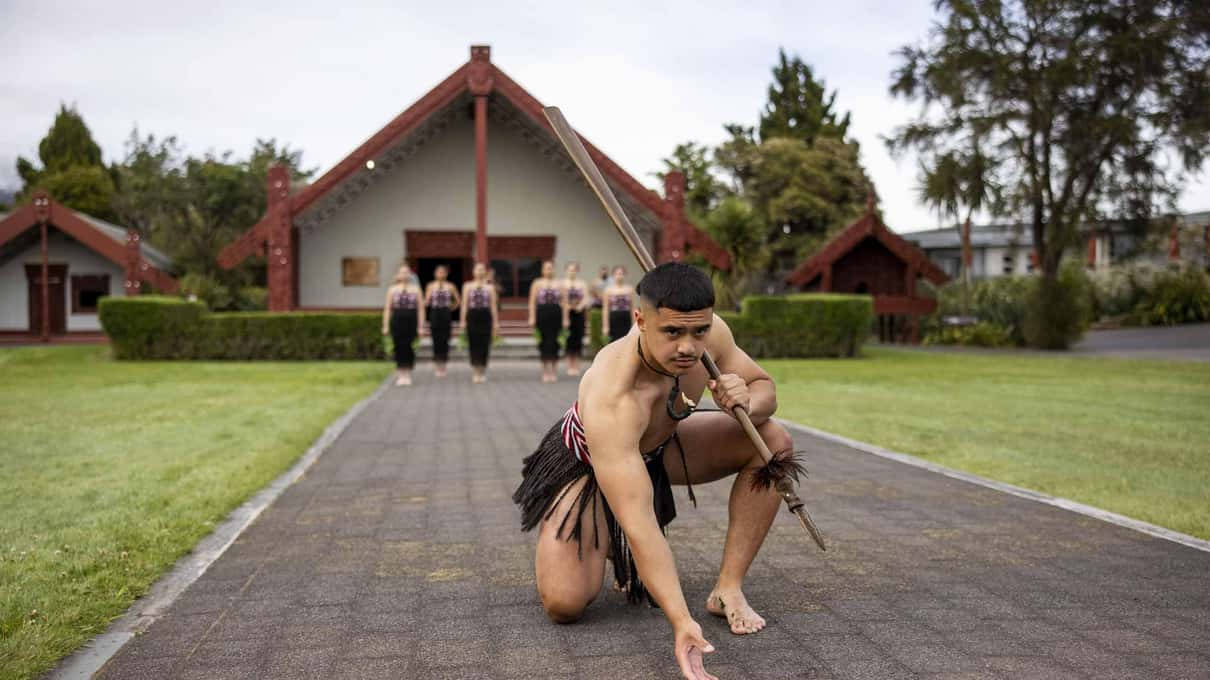
- The wero. A warrior comes forward with a weapon to test whether the visitors arrive in peace, then lays a token on the ground. The chief chosen by the visitors steps up and picks it up, which shows the group comes as friends;
- The karanga. A woman of the hosts sends out a long, high call that draws the visitors forward, and in a full ceremony a woman on the visitors' side usually answers;
- Speeches. Speakers greet the guests and often honor those who have passed on. A song usually follows each speech;
- The hongi. Host and guest press noses and foreheads together and share a breath. After the hongi the visitor is no longer a stranger.
At Mitai the visitors pick one person to stand as their chief. If that is you, the hosts explain what the role involves and guide you through it on the night. Te Puia writes the ceremony as pōhiri, a spelling you will often hear in Rotorua.
Silence for the challenge and the haka
The wero is meant to be intense. Expect wide eyes and an outstretched tongue, and a haka carries the same force. It can feel theatrical to a visitor. To the hosts it is serious. Stay quiet and still while the challenge unfolds. Laughter reads as disrespect here. So does pulling faces back at the warrior, or filming with a running commentary. If you are the chief, keep your eyes on the warrior as you pick up the token, and do whatever the hosts asked of you beforehand. For applause, take your cue from the hosts.
More than a war dance
The haka is far more than a war dance. Haka welcome guests and mark big achievements. Some farewell the dead. Each one has its own words. The best known, Ka Mate, was composed around 1820 by the chief Te Rauparaha and celebrates his escape from enemies who were hunting him. Most visitors know it from the All Blacks before a rugby test. Poi are soft balls on cords that the women performers usually swing and tap in rhythm. Waiata are songs, and mōteatea are older chanted songs, often laments, that hold history in their lines. At Mitai you hear all of them in one performance, along with traditional games.
Photos and tā moko
Photos are welcome during most performances, and the hosts say when the camera can come out. Ask before taking a close-up of anyone, and especially of tā moko, the traditional tattoo of the face and body. A moko speaks of the wearer's descent and identity, so it is personal, not decoration. Many Māori object to moko designs being copied onto costumes or souvenirs, which is a good reason to admire them without borrowing them. Turn the flash off on the forest walk too, because bright light dims the glowworms for everyone.
A welcome in the carved meeting house
Te Puia's two-hour visit pairs a guided walk through the geyser valley with a pōhiri and a haka inside Te Aronui a Rua, from ~$80. Bring a hat for the open paths, and cancel without charge up to 24 hours ahead.
Where tapu applies
Tapu means sacred or set apart, and its opposite, noa, covers everyday things such as food. The two are kept separate. The head is the most tapu part of the body, so do not touch anyone's head, including a child's. Food must stay away from tapu things, which is why you should never sit on a table where people eat, or step over food laid out on the ground. A wharenui, the carved meeting house of a marae, has its own rules where a visit includes one. Shoes come off at the door. Food and drink stay outside.
These customs matter most at the Whakarewarewa Living Māori Village guided tour, from ~$25, where a resident guide leads you for an hour past the marae and the cooking pools. The catch is that you are walking through people's home, so move as a guest. Stay with your guide, keep out of private yards, and ask before you photograph anyone.
Words to know
Te reo Māori is an official language of New Zealand, and you will hear it everywhere in Rotorua. Vowels are short and pure, a macron makes a vowel long, and "wh" usually sounds close to an English f.
| Word | Meaning | When you will use it |
|---|---|---|
| Kia ora | Hello, thanks, good health | Greeting anyone, any time |
| Mōrena | Good morning | At breakfast or the morning pickup |
| Haere mai | Welcome, come in | You will hear it at the gate |
| Ka pai | Good, well done | Praising the food or a performer |
| Kai | Food | When dinner is called |
| Whānau | Family, extended family | Hosts often treat guests as whānau for the night |
| Marae | A community's meeting ground | Te Puia and Whakarewarewa both have one |
| Wharenui | Meeting house | Shoes off at its door |
| Iwi | Tribe, a people | Te Arawa is the iwi of the lakes |
| Tapu | Sacred, restricted | The sacred spring at Mitai |
| Aroha | Love, compassion | In songs and farewells |
| Ngā mihi | Thanks, greetings | Thanking your guide |
| Kia ora rawa atu | Thank you very much | For a night that went above and beyond |
Saying thank you
Tipping is not expected in New Zealand, and the hosts do not rely on it the way US guides do. A thank-you is welcome for great service, and a warm "kia ora" or "ngā mihi" on the way out lands better than cash. At Mitai the night closes with a poroporoaki, a farewell, so stay for it before you head for the ride home. The Mitai evening, step by step gives the full running order. To see how the welcome differs at the other venues, read our comparison of the four cultural experiences. Families with young children will find the age advice in Rotorua with kids. The hāngī dinner explained covers the meal that follows the welcome.